
White-label connectivity for fintechs & neobanks
Bundle global SIM packs directly into your app and card.
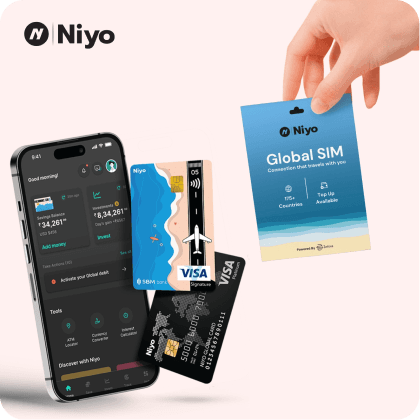
Fintechs and neobanks pair Zetexa's connectivity with their card or app — like our partner Niyo — so international spenders stay connected the moment they land.
A neobank or card program already owns the exact moment a customer needs travel connectivity — the app is open, the balance or card is already funded, and the customer is about to spend money in a country their home carrier charges a premium to reach. Bundling eSIM into that same app, rather than sending customers to a third-party travel eSIM app, keeps the feature — and the customer relationship — inside the product the fintech already built.
The integration mirrors the app's existing wallet, so funding and debiting a connectivity balance uses the same pattern already built for other in-app spending, rather than standing up a separate billing system to reconcile. Lifetime-validity eSIM makes it a retention feature rather than a one-trip freebie — customers keep the same eSIM active across every future trip instead of re-purchasing each time, which is the detail that turns connectivity from a one-off perk into a reason to keep using the app. Zetexa's partner Niyo pairs connectivity with its zero-forex-markup card on exactly this basis: a card that solves the cost of moving money across a border, paired with an eSIM that solves the cost of moving data across the same one.
What fintechs and neobanks get
How Niyo-style connectivity ships inside a fintech app
Design the in-app entry point — a card benefit, a standalone purchase, or both
Integrate the API against your existing auth and wallet/balance system
Set plan pricing and destination coverage to match your customer segments
Launch, then track redemption and revenue from the dashboard to tune the offer
Building your own MVNO vs. integrating Zetexa's API
| Capability | Zetexa | Competitor |
|---|---|---|
| Time to ship | Weeks against a documented API | Months to years standing up carrier relationships |
| Ongoing operations | Zetexa manages the network layer | In-house team manages carrier contracts and support |
| Billing integration | Wallet API mirrors your existing balance system | Separate billing system to reconcile |
| Coverage | 180+ countries from day one | Built out market by market |
FAQ
Questions about White-label connectivity for fintechs & neobanks
Through the same wallet-based billing API — your app can fund and debit the connectivity balance using the same pattern it already uses for other in-app spending.
Niyo is a real Zetexa partner, and this page describes the same integration pattern — a wallet-based API pairing travel eSIM with Niyo's zero-forex-markup card. See the Niyo case study for the full partnership details.
No — the wallet-based API is designed to integrate with your existing app or card infrastructure without requiring in-house telecom expertise.
Yes — you can offer it as a free perk bundled into your app or card tier, or as a paid feature customers purchase directly, depending on how you want to position it.
Most partners integrate the API and launch within a few weeks, following the same pattern used for in-app fintech features.
Still have questions? Our team can walk you through it.